Shop All Bikes
Check Out Our Popular Ebikes


Off-road riding puts more demand on your brakes. Gravel, steep descents, sand, mud, and repeated hard stops can quickly expose a worn or poorly maintained brake system.
That matters on a long-range fat tire e-bike, where extra battery capacity, wider tires, and riding gear can add more weight to control. A soft lever, rubbing rotor, or weak braking response is not something to ignore before heading onto a trail.
This guide explains how to check and maintain hydraulic disc brakes on an e-bike, spot common problems, and know when to stop riding. It applies to hydraulic disc brakes, not mechanical cable-actuated disc brakes or rim brakes.
Hydraulic brakes compensate for normal pad wear, so the lever can still feel fairly normal even when the pads are getting thin. That is why a lever test alone is not enough.
Check the brake pads, brake rotor, caliper, hose, and lever as part of a regular pre-ride routine. This is especially important before steep descents, loose terrain, or longer rides on a heavy fat tire e-bike.
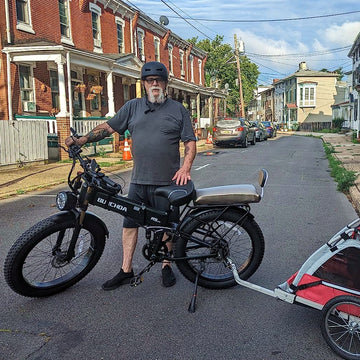
If you ride a Burchda fat tire e-bike off-road, a quick brake check should be as routine as checking your tire pressure and battery charge.
Use this quick routine before a ride, after transporting your e-bike, or after riding in mud, sand, rain, or rocky terrain.

Stand beside the bike and squeeze the front brake lever, then the rear lever. Both should feel firm and predictable.
If a lever suddenly feels soft, pulls much closer to the grip than usual, or changes noticeably from one ride to the next, inspect the brakes before riding.
Check the lever body, hose, fittings, caliper, and bleed port area. Look for wet spots, oily residue, damaged hose covering, cracks, abrasion, swelling, or loose fittings.
Do not ride if you suspect a fluid leak. Hydraulic fluid loss can reduce braking performance.
Look through the caliper opening to see how much friction material remains. Depending on the brake design, you may need to remove the wheel or pads for a clear view.
Look for pads that are thin, unevenly worn, cracked, glazed, or contaminated with oil. Follow the minimum pad-thickness specification for your brake model.
Lift the wheel and spin it slowly. Listen for rubbing that continues through most of the rotation.
Check for wobble, deep grooves, cracks, oil contamination, or obvious heat discoloration. Fix constant rubbing that noticeably slows the wheel before a long ride.
Test the front and rear brakes separately in a flat, open area. Braking should feel smooth and predictable, without pulsing, vibration, grinding, or sudden pulling.
If you ride with gear or a loaded rack, test the bike with a realistic load when possible. Extra weight can change how the bike feels under braking.

A spongy lever can mean air is trapped in the hydraulic system. It can also point to a fluid issue, a leak, or another problem affecting brake pressure.
Check the pads, rotor, hose, and fittings first. You may need a brake bleed, but it isn't the answer to every soft lever.
Excessive lever travel may be caused by worn pads, trapped air, or a hydraulic problem. A gradual change is worth checking, while a sudden change deserves immediate attention.
Do not head into steep or technical terrain until you know why the lever travel changed.
Worn pads, contaminated braking surfaces, glazing, overheating, or hydraulic problems can all reduce braking power.
If your e-bike does not slow down as confidently as it used to, inspect the system before your next ride. A working motor or display does not mean the brakes are safe.
Fluid around hydraulic brake parts is a warning sign. Do not wipe it off and keep riding.
The leak may come from a hose, fitting, lever, caliper, or internal seal. Identify and repair the source before riding again.
Brief noise after riding through water can happen. Persistent squealing, grinding, or harsh metal-on-metal noise needs attention.
Squealing may point to contamination, glazing, worn pads, rotor condition, or alignment issues. Grinding can mean the pads are worn too far and may damage the rotor.
Never spray chain lube, WD-40, silicone spray, or general-purpose lubricant near pads or rotors.
Persistent rotor rub may come from caliper misalignment, a bent rotor, incorrect wheel installation, debris, or uneven piston movement.
A brief touch is not always serious. Correct constant rubbing that creates drag or worsens after braking.
Long descents, loose terrain, repeated braking, and added load can generate heat in the pads and rotor.
If braking becomes weaker, inconsistent, or noticeably different after a descent, stop in a safe place and inspect the system after it cools.
Oil and grease can cause noise, weak braking, and inconsistent performance. Common sources include chain lube, brake fluid, finger oils, degreaser, silicone spray, and automotive cleaning products.
Cover the rotor and caliper with a clean rag or piece of cardboard before lubricating the chain. For routine cleaning, use a clean lint-free cloth and a brake-safe product approved for your brake system.
Heavily contaminated pads may need replacement. Cleaning does not always restore reliable braking.

Before ordering replacement pads, identify your brake caliper brand and model. Confirm the pad shape, pad compound, and retaining hardware because brake pads are not universal.
If your current pads are worn and you need a replacement set for your Burchda e-bike, you can check out our replacement e-bike brake pads.
The basic process is to remove the wheel, remove the retaining hardware and old pads, inspect the caliper and pistons, install compatible new pads, reinstall the wheel, and test brake function.
Do not squeeze the brake lever while the wheel is removed unless a proper pad spacer or bleed block is installed. The pistons can move out too far.
New pads need to be bedded in before they reach full braking performance.
Inspect the rotor for cracks, warping, deep grooves, visible damage, contamination, or excessive wear. Check the minimum thickness marked on the rotor or listed in the manufacturer's documentation.
Do not keep riding with a cracked or badly deformed rotor. A new rotor should also prompt a pad inspection because worn, glazed, or contaminated pads may not perform well with it.
If your rotor is damaged or below its stated wear limit, choose a compatible replacement e-bike brake rotor for your Burchda model.
Hydraulic brakes do not use cable-tension adjustment like mechanical disc brakes. If you hear rotor rub, first check that the wheel is installed correctly, the rotor is not bent, and the caliper bolts are secure.
If those parts look normal, you may need to re-center the caliper. Many systems let you slightly loosen the caliper mounting bolts, hold the brake lever to center the caliper, then tighten the bolts to the torque specification for your bike and brake system.
If rubbing continues, or you find a bent rotor, stripped threads, damaged hardware, or uneven piston movement, have a qualified technician inspect the brake.
New pads and rotors need a bedding-in period before they deliver their intended braking performance. Skipping it can lead to weak, noisy, inconsistent, or overly grabby brakes.
Find a safe, traffic-free area. Ride at a moderate speed, apply firm but controlled braking without locking the wheel, and repeat the process according to your brake manufacturer's instructions.
Let the brakes cool if they get very hot. Do not expect maximum braking performance on the first stop with new pads or rotors.
Some e-bikes reduce or cut motor power when you pull a brake lever. Check your owner's manual to see whether your model includes this function.
Test it in a safe area and confirm the motor responds as intended when you apply the brakes. If the bike continues to deliver unexpected power while braking, stop using it until you diagnose the issue.
If the brake lever, caliper, or power-off function needs replacement, check the compatible replacement e-bike brake system for your Burchda model.
Hydraulic brakes depend on the correct fluid. Using the wrong type can damage internal seals and make the system unsafe.
Check the brake manufacturer's manual, product page, lever reservoir cap, or official support documents before opening the hydraulic system.
Hydraulic e-bike brakes may use mineral oil or DOT brake fluid. They are not interchangeable.
Shimano hydraulic brake systems use Shimano mineral oil. Many SRAM hydraulic brake systems use DOT 4 or DOT 5.1 brake fluid. Always use the exact fluid specified for your brake model.
DOT 5 and DOT 5.1 are different fluids. If your brake manual specifies DOT 4 or DOT 5.1, do not substitute DOT 5.
If the wrong fluid enters the system, stop using the brake and have it inspected.
Bleeding removes trapped air from the hydraulic system and refreshes the fluid when required. It may improve a soft or spongy lever, but it will not fix every brake problem.
Inspect the pads, rotor, caliper alignment, hose condition, and fittings before deciding that a bleed is needed.
You may need a brake bleed if the lever remains soft or spongy after you have ruled out worn pads, contamination, and visible leaks.
Excessive lever travel may also point to a hydraulic issue. Follow the diagnostic guidance for your brake model rather than relying on a generic service interval.
You may also need to bleed the system after a repair that opens the hydraulic circuit, such as servicing the caliper, lever, or hose.
Bleeding will not repair worn pads, contaminated pads, a dirty rotor, caliper misalignment, a bent rotor, damaged hardware, or a leaking hose.
Identify and repair any leak before bleeding the system. Adding fresh fluid does not repair a damaged hose, fitting, lever seal, or caliper seal.
First, confirm the exact brake brand and model. Bleed ports, fittings, tools, brake fluid, and procedures vary by system.
Use the specified fluid and a compatible bleed kit. Protect the rotor and pads from contamination, and follow the official procedure for your brake model.
If you are unsure about the fluid, tools, fittings, or service sequence, do not guess.
Stop riding your e-bike and have the brakes inspected if you notice any of the following:
For a fat tire e-bike used on trails, hills, or rough terrain, do not take chances with braking problems. If you are unsure whether an issue is minor, have the system checked before your next ride.
Hydraulic brakes are low-maintenance, but they are not maintenance-free. A quick check before a ride can reveal a worn pad, rubbing rotor, damaged hose, or weak lever before you reach a steep or loose section of trail.
Test both levers, inspect the pads and rotors directly, and keep oil and grease away from braking surfaces. If your brake performance changes suddenly, stop and inspect the system before riding again.
For replacement parts and everyday maintenance essentials, browse Burchda e-bike accessories.
Perform a quick check before each ride. Test the levers, spin the wheels, and look for obvious leaks or rotor rub.
Inspect pads, rotors, hoses, and calipers more closely regularly. Check more often after wet, muddy, sandy, steep, or high-mileage rides.
A spongy lever may indicate air in the hydraulic system, but it can also be related to a fluid issue, a leak, or another brake problem.
First, inspect the pads, rotor, hose, and fittings. If the issue remains, follow the manufacturer's service instructions or have a mechanic inspect the brakes.
Replace pads when they reach the minimum thickness specified for your brake model. Also replace them if they are worn unevenly, contaminated with oil, cracked, glazed, or making metal-on-metal contact with the rotor.
Don't use another brand's wear limit as a universal rule. Check the documentation for your own brake system.
Chain lube may have reached the rotor or pads. Even a small amount of oil can cause squealing, inconsistent braking, or reduced stopping power.
Clean the rotor with a brake-safe product approved for your system. If noise or poor braking continues, inspect the pads for contamination and replace them if necessary.
No. Use only the fluid specified for your exact brake model.
Some brakes use mineral oil, but the required formula can vary by manufacturer. Follow your brake manufacturer's documentation rather than relying on a generic mineral-oil recommendation.
No. Never mix DOT fluid and mineral oil.
They are not compatible. Using the wrong fluid can damage brake components and make the system unsafe.
Hydraulic brakes compensate for normal pad wear automatically, so they do not use cable-tension adjustment like mechanical disc brakes.
They still need regular inspection. You may need to clean the system, replace pads, correct caliper alignment, address rotor rub, or service the hydraulic system.
You can bleed hydraulic brakes if you know the exact brake model, required fluid, compatible bleed kit, and manufacturer-approved procedure.
If you see a leak, are unsure about the fluid type, or cannot restore a firm lever after service, have a qualified technician check the system.